
About

AI/ML Engineer and Healthcare AI Researcher. Building intelligent systems that bridge the gap between cutting-edge AI research and real-world healthcare applications.

My Story
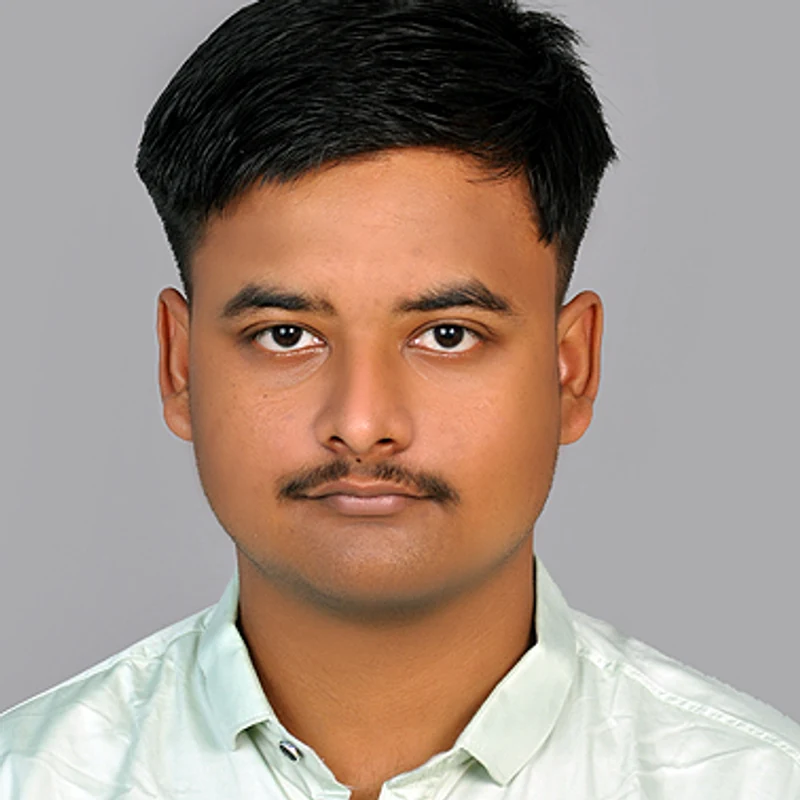
Avishek Rauniyar, AI Engineer and Researcher

I build AI systems and publish research. My work covers agentic architectures, retrieval-augmented generation, healthcare ML, and knowledge graphs. I'm interested in systems where correctness matters — clinical settings, structured knowledge extraction, and multi-agent coordination where a wrong answer has real consequences.

Currently, I'm an AI Research Associate at Harvard Medical School & Dana-Farber Cancer Institute and an Elite AI Research Assistant at Amrita AI (Faridabad). I've published four papers across Elsevier's Procedia Computer Science and Springer conference proceedings (ICTCS).

I won the NASA Space Apps Challenge Local Impact Award in 2024 for an AI system built in 48 hours. Before that, I published my first conference paper during my B.Tech. The through-line in my work is building things that work, writing about what I learn, and treating every project as a chance to move the field forward — even if just incrementally.

Journey

2025–Present

Elite AI Research Assistant

Amrita AI (Amrita School of AI, Faridabad)

Contributing to cutting-edge AI research projects, focusing on developing innovative machine learning models and algorithms to solve real-world problems in medical systems.

2025–Present

Research Associate – Medical AI

Harvard Medical School & Dana-Farber Cancer Institute

Developing medical AI models for histopathology and clinical signal analysis, with scalable data pipelines and interpretable tools supporting real-time clinical use.

2025

QA Engineer Intern

Heapvue

Built and maintained automated test scripts using Selenium Python, improving testing efficiency by 40%. Performed API testing with Postman and collaborated with developers to ensure quality across microservices.

2024

AI Research Intern

Amrita Vishwa Vidyapeetham

Developed and researched prostate cancer grading systems using deep learning.

2022–2026

B.Tech Computer Science (AI)

Amrita Vishwa Vidyapeetham, Amritapuri

Specialized in Artificial Intelligence. CGPA: 9.18/10. Published first conference paper during undergrad (ICTCS 2023, Springer).

Values

Research as Practice

Publish findings, share methodology, and treat every project as an opportunity to contribute something reproducible to the field.

Build What Ships

A system that runs on your laptop is a prototype. A system that handles edge cases, has monitoring, and doesn't crash at 2 AM is engineering.

Write to Think

Writing clarifies ideas that feel clear in your head. Technical writing, papers, and post-mortems are how I refine what I think I know.

Compound Over Time

Skills, publications, and open-source contributions accumulate. The goal isn't a single big break. It's consistency across years.

Bio

Short · 100 wordsSelect text to copy
Avishek Rauniyar is an AI/ML Engineer and Healthcare AI Researcher. He is a Research Associate — Medical AI at Harvard Medical School & Dana-Farber Cancer Institute, and an Elite AI Research Assistant at Amrita AI (Faridabad). He works on agentic AI systems, healthcare ML, and knowledge graph applications. He has four publications in venues including Procedia Computer Science (Elsevier) and Springer conference proceedings (ICTCS). A NASA Space Apps Challenge Local Impact Award winner, he holds a B.Tech in Computer Science (AI) from Amrita Vishwa Vidyapeetham with a CGPA of 9.18/10. He is from Barahakshetra, Nepal.
Medium · 250 wordsSelect text to copy
Avishek Rauniyar is an AI/ML Engineer and Healthcare AI Researcher working on agentic AI systems, healthcare ML, and knowledge graph applications. He is a Research Associate — Medical AI at Harvard Medical School & Dana-Farber Cancer Institute and an Elite AI Research Assistant at Amrita AI (Faridabad). His research spans multi-agent architectures, retrieval-augmented generation, and clinical NLP. He has published four papers: a prostate cancer stratification framework in Procedia Computer Science (Elsevier, 2025), conference papers on AI-driven wildlife monitoring and electronic voting systems at ICTCS (Springer), and a book chapter on ML algorithm comparison (Springer, 2024). Before his current roles, he interned as a QA Engineer at Heapvue, where he built automated test scripts with Selenium Python that improved testing efficiency by 40%. He was also an AI Research Intern at Amrita Vishwa Vidyapeetham, where he developed deep learning models for prostate cancer grading. Avishek is a NASA Space Apps Challenge Local Impact Award Winner (2024), where he built an AI solution to a space exploration challenge in 48 hours. He contributes to open-source projects and maintains a technical blog on AI engineering practices. He holds a B.Tech in Computer Science (AI) with a CGPA of 9.18/10 from Amrita Vishwa Vidyapeetham, Amritapuri. Originally from Barahakshetra, Nepal, he works at the intersection of research and engineering — where papers meet production systems.
Full · 500 wordsSelect text to copy
Avishek Rauniyar is an AI/ML Engineer and Healthcare AI Researcher building systems at the intersection of agentic AI, healthcare ML, and knowledge graphs. He is a Research Associate — Medical AI at Harvard Medical School & Dana-Farber Cancer Institute, where he develops medical AI models for histopathology and clinical signal analysis with scalable data pipelines and interpretable tools supporting real-time clinical use. He is also an Elite AI Research Assistant at Amrita AI (Amrita School of AI, Faridabad), contributing to cutting-edge AI research projects focused on developing innovative machine learning models and algorithms for medical systems. His research portfolio includes four publications across multiple venues. His work on prostate cancer stratification, published in Procedia Computer Science (Elsevier, 2025, Volume 259, pp. 356–365), presents a deep learning framework for multi-dimensional cancer staging that integrates histopathological features with clinical biomarkers. At the International Conference on Information and Communication Technology for Smart Systems (ICTCS, Springer), he co-authored papers on AI-driven wildlife monitoring (ECO-Guard, 4 citations) and a secure electronic voting system (PyVote). His book chapter on machine learning algorithm comparison (Springer, 2024) provides a systematic framework for evaluating classification models across diverse datasets. His technical work focuses on building systems where correctness and reliability are non-negotiable. This includes multi-agent coordination architectures where tool failures cascade, RAG pipelines where retrieval quality determines clinical safety, and knowledge graph construction where extraction precision directly impacts downstream reasoning accuracy. Before his research roles, Avishek interned as a QA Engineer at Heapvue, where he built and maintained automated test scripts using Selenium Python, improving testing efficiency by 40%. He performed API testing with Postman, identified bugs and performance issues, and collaborated with developers to ensure quality across microservices. He was also an AI Research Intern at Amrita Vishwa Vidyapeetham, developing deep learning models for prostate cancer grading systems. Avishek is a NASA Space Apps Challenge Local Impact Award Winner (2024), recognized for building an AI solution to a real-world space challenge under extreme time constraints. He contributes to open-source AI projects and writes about engineering practices, lessons from production deployments, and the gap between academic research and systems that ship. He holds a B.Tech in Computer Science (AI) with a CGPA of 9.18/10 from Amrita Vishwa Vidyapeetham, Amritapuri. He completed his Higher Secondary Education (+2) at Bal Kalyan Vidya Mandir, Biratnagar, Nepal (GPA: 3.63/4) and Secondary Education (SEE) from the same institution (GPA: 3.9/4). From Prakashpur Bazaar, Barahakshetra-10, Sunsari, Koshi, Nepal, his approach brings together research rigor and engineering pragmatism — publishing findings, sharing methodology, and building systems that hold up under real-world conditions.

Research Interests

Agentic AIRetrieval-Augmented GenerationHealthcare AIMedical ImagingClinical NLPKnowledge GraphsLLM Applications

Frequently Asked Questions

Who is Avishek Rauniyar?

Avishek Rauniyar is an AI Researcher and Engineer at Amrita Vishwa Vidyapeetham, Amritapuri. He builds intelligent systems at the intersection of agentic AI, healthcare AI, and applied research. He is a published researcher, NASA Space Apps Challenge award winner, and open-source contributor.

What does Avishek Rauniyar research?

His research areas include agentic AI systems, healthcare AI, knowledge graphs, retrieval-augmented generation (RAG), multi-agent architectures, and clinical decision support systems. He has published in Springer and Elsevier venues.

Where does Avishek Rauniyar work?

He is an AI Researcher at Amrita Vishwa Vidyapeetham, Amritapuri, India, in the Department of Computer Science and Engineering. He is originally from Barahakshetra, Nepal.

What projects has Avishek Rauniyar built?

His projects include CogniMail AI (multi-agent email intelligence), Omkara Extractor (knowledge graph construction pipeline), GraphRAG Movie Recommendation Engine, and SageLoRa (parameter-efficient LLM fine-tuning). See the projects page for detailed case studies.